
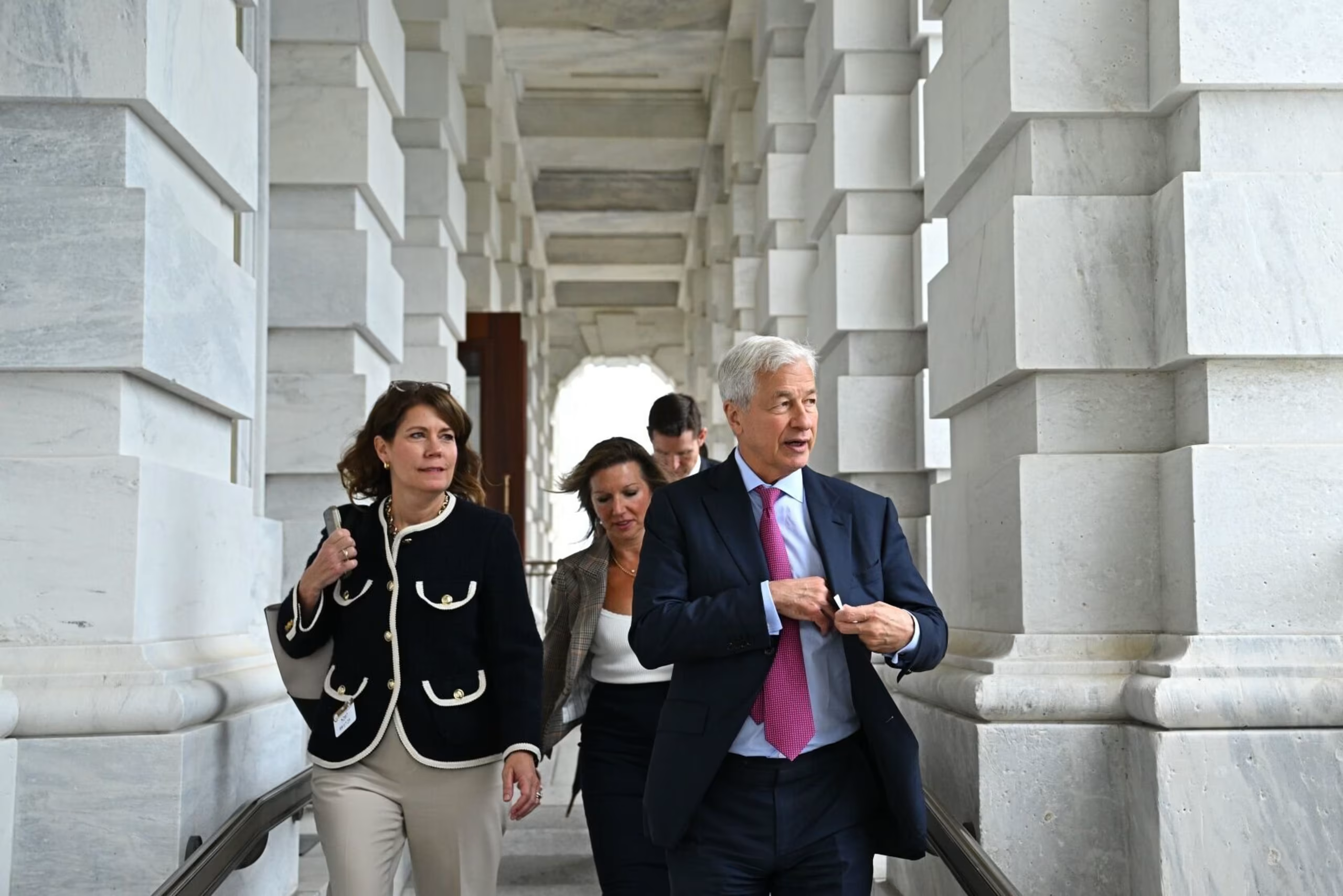
Jamie Dimon, right, at the Capitol in September. Graeme Sloan/Bloomberg News
Jamie Dimon Challenges Washington
JPMorgan’s chief executive warns that political pressure on the Federal Reserve could unsettle markets, exposing a growing rift between Wall Street and US economic policy.
The uneasy relationship between Wall Street and Washington has entered a new phase. Jamie Dimon, chief executive of JPMorgan Chase, has publicly cautioned against political interference with the Federal Reserve, placing himself at odds with Donald Trump and reigniting a long-standing debate over monetary independence.
Dimon’s warning was direct: undermining the autonomy of the Federal Reserve risks higher inflation expectations, rising bond yields and long-term damage to market confidence. For investors, the message was unambiguous—central bank credibility remains a cornerstone of financial stability.
A Break in a Fragile Détente
Until recently, Dimon had maintained a pragmatic channel to the Trump camp, positioning himself as a bridge between corporate America and political power. That détente now appears strained. Trump has dismissed Dimon’s concerns, arguing that the Federal Reserve should be subject to greater political oversight and more aggressive rate cuts.
At the center of the dispute is Fed Chair Jerome Powell, whose leadership has come under increasing political scrutiny. Dimon has defended Powell and the institution, stressing that markets price risk based on the assumption that monetary policy is insulated from short-term political agendas.
Regulation, Rates and Credit Markets
The confrontation extends beyond the Fed. Trump has revived proposals to cap credit-card interest rates at 10 percent—a move the banking sector strongly opposes. Dimon and other bank executives argue that such caps would restrict access to credit, particularly for higher-risk consumers, and distort lending markets rather than protect them.
From Wall Street’s perspective, the issue is structural. Credit pricing reflects risk, funding costs and capital requirements. Political intervention, bankers warn, could push lending activity into less regulated corners of the financial system.
Why Markets Are Paying Attention
Dimon’s remarks resonate far beyond JPMorgan. As the head of the largest US bank, his views are widely seen as a proxy for broader financial-sector sentiment. When he warns of rising rates and market instability, investors listen.
Recent market reactions suggest heightened sensitivity to signals of political pressure on monetary policy. Bond yields, inflation expectations and bank equities all remain exposed to shifts in perceived institutional independence.
A Broader Institutional Test
The dispute underscores a deeper tension shaping global markets: the balance between political authority and economic institutions. While governments seek greater influence over monetary outcomes, financial markets continue to reward predictability, rule-based policy and institutional autonomy.
For investors, the takeaway is clear. The debate between Jamie Dimon and Washington is not about personalities—it is about the framework governing the world’s most important capital market. How that framework evolves will have lasting implications for interest rates, credit availability and global investment flows.

News
Opinion
WIN Membership
Customer Service
More